Why we play
GTA 6 (Grand Theft Auto VI): the biggest game ever is a love story
Thirteen years of waiting, the biggest launch entertainment has ever seen, and in the middle of it two people trying to look after each other. This is the long version.
GTA 6 at a glance
Grand Theft Auto VI, which everyone calls GTA 6, came out on 19 November 2026 on PlayStation 5 and Xbox Series X/S. Rockstar Games made it and published it. It is the eighth main Grand Theft Auto game, the sixteenth if you count every spin-off, and the first main one since Grand Theft Auto V in 2013.
It is a single-player game. It runs at 30 frames per second on both consoles and costs US$79.99. There is no PC version and no date for one, though industry reports in October pointed to the first three months of 2027. If all you have is an Xbox One, you can play it through Xbox Cloud Gaming.
It is set in Leonida, a made-up Florida, and you play a couple: Jason Duval and Lucia Caminos. It sold 32.5 million copies before it was out and took US$3.79 billion on its first day. It sits at 99 out of 100 on Metacritic.
We are four days in as we write this, so this is not a review. It is everything else: where the series came from, what the game is, who is in it, what you do, how the story goes, how it was built and what that cost, how it was sold, what the critics say, and why thirteen years of waiting made sense. It is long. Use the headings.
Two sections give away the story. They are marked, and everything outside them is safe to read before you play.
How we got here: Grand Theft Auto, 1997 to 2013
Grand Theft Auto started in Dundee, Scotland. Two programmers, David Jones and Mike Dailly, created it at a studio called DMA Design, and the first game came out in November 1997 for MS-DOS and Windows. The name is the American legal term for stealing a car. You played a criminal in a city, took jobs from bigger criminals, and drove wherever you liked. That first game already had three cities, and all three are still with us: Liberty City, which is New York; San Andreas, which began as San Francisco and later grew into a whole state; and Vice City, which is Miami.
It was in trouble from day one, and partly on purpose. The game was condemned in Britain, Germany and France for its violence, and Brazil banned it. The publicist Max Clifford planted sensational stories in the tabloids to help sell it. That pattern, outrage and sales arriving together, never left the series. Guinness World Records has called Grand Theft Auto the most controversial video game series in history, with more than 4,000 articles written about it.
In 1998 the American publisher Take-Two Interactive bought the assets of the game's publisher, BMG Interactive. A handful of BMG people moved to New York, among them the brothers Sam and Dan Houser, and in December 1998 they set up Rockstar Games as Take-Two's high-end label. DMA Design became Rockstar North and moved to Edinburgh. It is still the lead studio on the series. Sam Houser is still Rockstar's president.
A sequel, Grand Theft Auto 2, followed in 1999, along with two expansion packs set in 1960s London. Then came the game that changed everything. Grand Theft Auto III, in 2001, moved the series into three dimensions. You were no longer looking down on a city. You were standing in it. It is counted as a landmark, and for years afterwards any open-world crime game was called a Grand Theft Auto clone.
The next two built on it fast. Grand Theft Auto: Vice City, in 2002, gave the series its first speaking lead, voiced by Ray Liotta. Grand Theft Auto: San Andreas, in 2004, added a map with three cities and countryside between them, and let you change your character: clothes, hair, even body weight. Keep that last one in mind. It comes back in GTA 6.
Grand Theft Auto IV, in 2008, went the other way. It dropped much of the customising and aimed for realism and detail, with a Liberty City that closely matched New York and a lead, Niko Bellic, who carried real weight. It scored 98 on Metacritic, second only to The Legend of Zelda: Ocarina of Time. Remember that too.
Then Grand Theft Auto V, in 2013, with three playable leads you could switch between. It made US$815.7 million on its first day, a record for any entertainment product at the time. It was re-released in 2014, 2015 and 2022, and it has now sold more than 230 million copies, which makes it the second-best-selling video game ever made.
Some things stayed the same through all of it. The cities are parodies of real American cities. The radio plays real music between fake ads. The police chase you harder the worse you behave, with a wanted level counted in stars, an idea that other open-world games have borrowed ever since. And although the games are set in America, they are made in Scotland and full of Scottish in-jokes. In 2006 a BBC and Design Museum poll put Grand Theft Auto on a list of British design icons, next to Concorde, the Mini and the World Wide Web.
Altogether the series has shipped close to half a billion copies. Since Grand Theft Auto V, other publishers have moved their own release dates to stay out of a Rockstar game's month. That is the weight GTA 6 was carrying before anyone had seen a frame of it.
Vice City the first time
GTA 6 goes back to Vice City, so it is worth a minute on the first visit. Vice City appeared as one of the three cities in the 1997 game, but the one people remember is Grand Theft Auto: Vice City from 2002.
That game is set in 1986. You play Tommy Vercetti, just out of prison, who walks into a drug deal that turns out to be an ambush and spends the rest of the game building an empire out of the mess. It borrowed openly from Scarface and Miami Vice. Rockstar chose Miami because it wanted somewhere unlike the grey Liberty City of Grand Theft Auto III. The producer Leslie Benzies called Miami "a party town, all sun and sea and sex, but with that same dark edge underneath".
The numbers look small now. A core team of about 50 people at Rockstar North led it, and it began life as a planned mission pack for Grand Theft Auto III before the team decided it should be its own game. The development budget was US$5 million, which made it the studio's most expensive game to that point. It sold more than half a million copies in a day and 1.4 million in two days, the fastest-selling game in history at the time, and 17.5 million across all platforms by March 2008.
Two things carry straight across to GTA 6. The team went to Miami in person to research it, which Rockstar has done again on a much larger scale. And the aim, in the developers' words, was a "living, breathing city" where the player would feel that "life still goes on" while their character was indoors. Twenty-four years later that is still the job. The difference is the tools: about 50 people then, more than 4,700 now.
Three of the 2002 game's radio stations are back in the new one. So is the city, though it is not the same city. The series treats its eras as separate universes that share place names and brands, and the Vice City of GTA 6 is a new, present-day version built from nothing.
Welcome to Leonida
Leonida is Rockstar's Florida. Vice City is its Miami, back as a main setting for the first time since 2002. The Grassrivers are the Everglades and the Leonida Keys are the Florida Keys. Around them sit the town of Ambrosia, Port Gellhorn, and Mount Kalaga National Park. The state has five counties: Vice-Dale, Kelly, Mariana, Leonard and Lummox. The map is reported to be three times the size of the playable area in Red Dead Redemption 2, Rockstar's last game.
The series has always made fun of America, and this one goes after the 2020s: influencers, social media, police body cameras, Florida Man. Your in-game phone has Snapmatic, a send-up of TikTok and Instagram.
Writing satire about the present is harder than it sounds, because the present keeps outdoing you. The lead writer, Rupert Humphries, said the game's world "has to be more over the top, more insane, more in your face" than the real one. At the same time the writers were wary of jokes that would be stale by launch, in a game that took this long to make. So the characters avoid this year's slang and this month's memes. The idea was that they should feel a little timeless.
One more change in tone is worth knowing about. The older games made plenty of crude jokes about marginalised groups. This one does not. It still mocks America from top to bottom, but it has stopped punching down.
The weather is Florida's too. Rockstar rebuilt its weather system so that conditions are local and they last. Clouds form and move across the map. Rain falls on one suburb and not the next. Hurricanes and tropical storms come through in season, and when they do you can see less and the wind picks up. After a downpour the puddles stay, and water runs off roofs and lamp posts. Now and then, when the light is right, you get a rainbow.
Rockstar also went to the real place for the detail. From 2015 the studio sent teams to Miami to talk to police, club promoters, ex-criminals and gun dealers, then checked what they heard against books and news reports. More than 50 street artists painted murals for Vice City's neighbourhoods. From 2023 a Miami stylist, Jillian Carr, worked on the clothes, so that people in the game dress the way people there dress. The writer Michael Wiafe said the studio wanted to approach Miami's culture with "an open mind, a genuine appreciation and a deep curiosity".
The critic Sam White, writing for GQ, called Leonida the most technically and artistically impressive game world ever made. We have not seen all of it yet. Nobody has. By one reviewer's account you can finish the story without seeing much of it.
The people in the street
The thing that sets Leonida apart is not the buildings. It is the crowd.
Rob Nelson, who co-runs Rockstar North, said the size and detail planned for the world meant a "horrifying" amount of work on the people who would fill it. Rockstar opened a new studio in Los Angeles in 2023 mainly to do that work.
The people in GTA 6 are not generated by a formula. Rockstar chose to build them by hand. They vary in height and build, and in small things: freckles, moles, how tanned they are, their tattoos. Each has a personality shaped by the district they live in, what they have seen, and how you have treated them.
They notice you. Stand too close to a conversation and they clock you listening. Walk up to a shop as Lucia with a mask on and a gun out, and people back away before anything has happened. Rockstar started on this kind of reaction in Red Dead Redemption 2, where it was easier because the Old West is mostly empty. Doing it in a packed modern city is another matter, and it is one reason the game leans so hard on the consoles' processors.
The figure Rockstar gives is animations. GTA 6 has more than 600,000 of them for the people in its streets. Red Dead Redemption 2 had 300,000. Grand Theft Auto V had 55,000.
There is a neat piece of engineering under that. An animation made for a short person does not fit a tall one: the hands land in the wrong place. The obvious fix is a separate set of animations for every body shape, which would eat the console's memory. Rockstar instead built a system that adjusts each animation to the body as the game runs.
Then there is what they say. Rockstar put together a writing team in Los Angeles, comedy writers included, to write lines for the people you pass. James Horton, who directed the open-world writing, argued that the game has no background characters. Who counts as background depends on where you choose to look.
That is a claim about attention, and it is a good one. Most games tell you who matters by putting a marker over their head. This one is trying to make a place where the person at the bus stop might be worth listening to.
Jason and Lucia
You play two people. Jason Duval served in the US Army and then drifted into working for drug runners down in the Leonida Keys. Lucia Caminos starts the game in prison. They have a history and, it turns out, a son, Tomás. A job goes bad, they end up holding something that corrupt police want back, and from then on they have each other and not much else.
Lucia is the first woman to lead a Grand Theft Auto story. The 1997 game and a couple of later ones let you pick a female character, but those were silent avatars with no story of their own. Lucia has a full one. She is from Liberty City, her father taught her to fight, and she is set on giving her mother and her son the good life her mother has wanted since they left.
Rockstar took the shape of the pair from Bonnie and Clyde, and the outline was settled by late 2019. The two were designed against each other. Jason has had enough and wants a simple life. Lucia wants more than that and is willing to keep taking risks to get it. One pulls back and the other pushes on, and the story runs on that push and pull. Over the game they are meant to change each other.
The writers wanted Lucia to be strong without being a cliché, and to carry the kind of weight earlier Rockstar leads carried: Niko Bellic in Grand Theft Auto IV, Arthur Morgan in Red Dead Redemption 2. One of the writers, Alexa D'Agostino, drew on her own mother, an immigrant from Newark, New Jersey, whom she described as rowdy and kind and not someone who takes any nonsense. Lucia's first heist in the story is supposed to be easy and it lands her in prison. She keeps going anyway.
Another writer, Elizabeth Gauvey-Kern, said the studio "wanted both protagonists to be vulnerable, tough, flawed, right sometimes, wrong sometimes, able to learn from each other".
Manni L. Perez plays Lucia, and helped shape her. Rockstar kept that quiet for a long time. After months of guessing, her name was confirmed during the nominations broadcast for The Game Awards 2026, where she is up for Best Performance. Dylan Rourke plays Jason, voice and motion capture both. He is an actor and stand-up comedian from New York who came up through independent film, theatre and sketch comedy. On release day the two of them posted a photo of themselves in front of a billboard for the game, beside pictures of their characters.
This is also the first main Grand Theft Auto story since the original written without Dan Houser, who left Rockstar in 2020. The studio says it went back through its old games looking for ideas it never had the time or the hardware to finish, and one of them was a story with romance at the centre.
The response to Lucia has mostly been warm. Critics have praised her as a break from how the series used to treat women, and some see her as a sign of a wider shift in who gets to lead big games. It has not all been praise. Some critics say her look still leans on the stereotype it was meant to avoid. And a loud corner of the internet decided before launch that a woman in the lead was politics, and complained that Jason seemed weaker beside her, and even that the game has him doing housework.
On that last one we will say only this: a man who does the dishes for the mother of his child is not the weak one in any story we know.
The rest of the cast
Around the two leads is a crowd of people who want something from them.
Cal Hampton is Jason's friend, and paranoid about nearly everything. Bobby Moynihan plays him. Brian Heder, played by Stephen Root, has been running drugs in the Keys for decades and is also Jason's landlord. He hands the pair work and warns Jason not to sink any deeper, which is rich coming from him.
In Vice City there is Boobie Ike, played by Mike Forbs, who runs a small business empire. With Dre'Quan Priest (Naiqui Macabroad) he owns a record label, Only Raw Records. The label's act is Real Dimez, a duo made up of Bae-Luxe and Roxy, played by Hood Brat and Krissy Celess.
Raul Bautista is an old hand at robbing banks. Manny Pérez plays him. Mia Caminos, Lucia's mother, is played by Roselyn Sánchez and sells real estate.
Cygnus, the curator of Vice City's museum, is the first non-binary character in the series, played by Jesse James Rose. Rose has said Rockstar promised that players would not be able to attack the character, as a guard against the game being used to act out violence against trans people. In a series where you can attack nearly anyone, that is a deliberate line, and we think it is the right one.
There is one more name that fans of the older games will want to know about. It is in the story section below, because it is a surprise and should stay one if you want it to.
What you actually do
The old menu is all here. Steal a car, rob a shop, pick a fight, run from the police. You play from behind your character's shoulder, as either Jason or Lucia. Around the crime there is skydiving, wrestling, basketball, kayaking, scuba diving and a gym. You can change how both of them look: hair, clothes, accessories.
Out in the open world, Jason and Lucia can split up or do things together. How close they are depends on what you do with them. The game tracks it, and it matters at the end.
The big change is that the game keeps score of who you are. A Criminal Profile tracks how violent you get and how far you escalate when you commit a crime. It has five levels: Professional, Hardened, Violent, Psycho and Irredeemable. As it climbs, the world treats you differently and people react to you differently. If you played Red Dead Redemption 2, it works a lot like the honour system there. Each of the two has their own.
Your body keeps score too. Eat badly and your character puts on weight. Exercise and it comes off. That idea is back from Grand Theft Auto: San Andreas, twenty-two years on. Stay up for days and it shows on their face.
You also can't carry an armoury any more. In the older games you could pull a rocket launcher out of thin air. Here you get two long guns and two sidearms, and the rest stay in your car, the way they stayed on your horse in Red Dead Redemption 2. So you have to think before you step out. This one rule reportedly took years to get right. With fewer weapons, the old weapon menu had gaps in it, and Rockstar kept building new designs to replace it. In the end it came back to a version of the weapon wheel.
There is a number called Family Savings: the money Jason and Lucia are putting aside for a life after all this. It is separate from the cash you spend, and the story cares about it.
Your safehouses work like the camps in Red Dead Redemption 2. They are places to stop, and places where the two of them talk. The story is split into chapters, as that game's was, and Rockstar says it was written so that you would get to know different parts of Leonida along the way.
There are several endings. Which one you get depends on your Criminal Profile, your savings, how close the two of them are, and the choices you made. You can't replay earlier missions. But after the credits the game puts you back at the moment before the finale, with the last mission still on the map, so you can keep playing and then run the ending again another way.
A few things are not here. There is no first-person mode at launch, apart from aiming certain weapons. Rob Nelson said the studio put the effort into third-person animation instead. And Rockstar told the outlet Kinda Funny there would be no microtransactions in the game at launch.
Rockstar did find a limit to realism. Its rule was to add realism where it draws you in and leave it out where it turns into a chore. At one point you had to buy groceries and restock the fridge in the safehouse. They cut it, saying it complicated things. Somewhere there is a version of GTA 6 where the biggest game ever made sends you out for milk.
The story (spoilers from here)
This section gives away most of the plot, and the next one gives away the endings. If you want to go in fresh, skip ahead to the heading about the radio.
The game opens with a robbery going wrong. Lucia goes to prison for it and loses custody of her son, Tomás. From inside she gets in touch with her ex, Jason, and tells him the boy is his. When she is let out under supervision, wearing an ankle monitor, they get back together.
They want a future for Tomás that they can afford, so they take the work that is going. That means Brian Heder, the drug runner in Mariana County. A deal goes wrong, Jason's friend Donnie is killed, and Brian decides he has had enough and retires. The pair are out of a job.
An acquaintance called Mattia offers a simple delivery: a package with a bronze statuette and a hard drive inside. They are arrested with it. While they are being questioned, a corrupt officer, Aldo Méndez, has the other police in the squad killed to get the package. Jason and Lucia get out with it.
Jason is shot and ends up in hospital. Méndez's men come for Lucia at home, and she fights them off. Then they come for Jason at the hospital, and she gets him out. This is the turn the whole game rests on. They hole up in a run-down motel while she nurses him back to health, and to keep them going she gets mixed up with the local gangs and dealers.
Once Jason is on his feet they start robbing their way across the county. They want to know what is on the hard drive. With the takings they rent an apartment in Vice City. Jason falls in with Boobie Ike and works for him. Lucia finds her mother, Mia, again and helps with her real estate business.
Looking for someone who can crack the drive, they run into Brian again, and he points them to Raul Bautista, the bank robber. Raul likes what he sees and takes them on for a string of heists. He also has a plan to rob a rival, Kordell Grant, at an airport, and Lucia goes to work for Kordell's crew to get close. On the day, Kordell works out what is happening and drags Raul onto a plane. Lucia saves Raul and kills Kordell, and Jason gets the money back.
The drive is finally decrypted. Raul does not live to enjoy it. His partner, Valentina, sells him out to Méndez, who tortures him, and Jason ends his suffering.
Lucia goes to the man who owns the statuette, Giorgio Gallo, who is Mattia's boss. It turns out Mattia took the job to get out of crime and look after his family. They forgive him and help him leave town, and then they go to work for Giorgio's shipping business.
Here is the surprise for long-time fans. One job is to recover a shipment belonging to an associate of Giorgio's, a crime lord named Niko Bellic. He is the lead of Grand Theft Auto IV, he appears briefly in the late missions, and the original actor, Michael Hollick, came back to play him.
Lucia's lawyer, Abe Gonzalez, makes them an offer: he can get them out of this life if they have at least two million dollars in Family Savings. So that number on your screen was a plot point all along. Then Giorgio double-crosses them and leaves them to be arrested.
A statewide prosecutor, Danica Howard, offers Lucia her freedom in exchange for what is on the drive. Before that can go anywhere, Méndez and his men storm the police station to kill Jason. Jason fights his way out, Lucia breaks free and joins him, and between them they bring Méndez down.
Cornered and wounded, Méndez offers a deal: his protection for the drive. You choose. Take it, or kill him. Either way the two of them go after Giorgio, storm his tower with Brian's help, kill him, and upload the contents of the drive, which implicate a senator, Camila Fuentes.
Read it back and look at who is doing what. She rescues him from the hospital. He ends a friend's pain. They forgive the man whose package wrecked their lives because he did it for his family. The crimes are the plot, but the scenes people will remember are about loyalty.
The endings (bigger spoilers)
Last warning. This section says how the game can end.
The ending is decided by four things: each character's Criminal Profile, the Family Savings balance, how close Jason and Lucia are, and the choices you made, most of all whether you took Méndez's deal.
If you took the deal, the police surround the pair after they kill Giorgio. What happens next depends on your numbers. If Jason's Criminal Profile is high and the two are close, he goes back on the deal and tells Lucia to take the prosecutor's offer. He is shot. Lucia is arrested, or shot as well, depending on whether you choose to defend him or stay down.
If the two are not close, Lucia stays behind to buy Jason time, and he gets away to start again. She is arrested or killed, depending on her own Criminal Profile. If she is arrested, the prosecutor later lets her go, and she starts a new life with Tomás in Liberty City. If Jason survived, two years later he leaves her a duffel bag of money.
And if you took the deal with a low Criminal Profile, Méndez takes them into custody, betrays them, kills them both and dumps them in a swamp. Trusting him is the one choice the game punishes outright.
If you killed Méndez, the pair get out of Giorgio's tower, but they are too well known by now. The police chase them and corner them on a bridge. You can make a last stand: they drive at the blockade, are shot, and die holding hands. Or you can surrender. Surrender with a high Criminal Profile and they are shot as they step out of the car.
Surrender with a low Criminal Profile and enough savings, and you get the ending the whole game has been pointing at. Two years later Lucia pays the lawyer, Jason is bailed out, and they start again with Tomás. Without enough savings, Lucia brings Tomás to visit Jason in prison. And if the two were never close, with half the savings, Lucia stays with Tomás and Jason goes his own way. It is hinted that he met Niko to pick up a dog called Rocco.
When both of them die, Tomás is raised by Lucia's family in Liberty City. If they had saved enough, the lawyer turns up two years later and gives the money to her mother. In several endings there is a scene after the credits in which Cal, the paranoid friend, is sent the contents of the drive and is shocked by what he reads. Being paranoid, it turns out, was the correct position.
Line the endings up and the design is plain. The happy one needs three things together: little cruelty, real savings, and a strong bond. Keep your hands clean, put money aside for your kid, stay close to your partner. A game famous for letting you do anything has written an ending that rewards restraint, thrift and loyalty. We come back to that near the end of this article.
The radio, the album and the score
Grand Theft Auto has been about the radio since 2001. You steal a car and whatever its owner was listening to becomes your soundtrack. GTA 6 has stations for pop, country, hip-hop, African music, Latin music, classic rock, metal and more.
As usual, real musicians host some of them. Lana Del Rey and Morgan Wallen host the country station, Back Country Radio. Bad Bunny and RaiNao, both from Puerto Rico, host the Latin station, Cocoteo FM. Robyn and Alex Consani host the pop station, Flash FM. Trina and Trick Daddy, rappers from Miami-Dade County, host Dirty South Classics. "Weird Al" Yankovic voices the DJ on the 1980s throwback station, Vice City FM.
V-Rock, Flash FM and Emotion 98.3 are back from the 2002 game. So is talk radio. The comedian Stavros Halkias plays a host on WKTT, the right-wing talk station from Grand Theft Auto IV. The Brazilian singer Anitta hosts a sex and relationships advice show, Ask Dr. Nita. And for the first time in the series you can listen to podcasts on your phone while you walk, away from any car.
The game also carries Kamikazi, an unreleased song by D'Angelo, who died in 2025.
Then there is the album. Grand Theft Auto VI: The Album came out the day after the game, on 20 November, through Atlantic Records and Take-Two. It has 34 original tracks meant to sound like the music of Leonida, from a spread of artists that includes Travis Scott, Lana Del Rey, Dua Lipa, PinkPantheress, Fred Again, Zara Larsson, Yung Lean, Ca7riel and Paco Amoroso, and Morgan Wallen. Lana Del Rey's track, Crazy for You, had sat unreleased for years. Keith Richards turns up with a version of Bright Lights, Big City. Some of the artists are in the game too, as themselves.
Rockstar has made albums like this before, for Grand Theft Auto IV, Grand Theft Auto V and Red Dead Redemption 2. This one was rolled out like a pop record. On 15 September Travis Scott posted artwork in the style of the game, other artists followed, and billboards went up with Vice City art and a Spotify logo. Rockstar announced it two days later and put out six singles at once. Ten singles had come out by launch.
Reviews have been warm but not blind. Maura Johnston at Rolling Stone compared it to flipping fast through a radio dial, which is surely the point, and called it one of the last blockbusters of the monoculture. Mark Kennedy at the Associated Press found it ambitious, overstuffed and chaotic, and compared it to a muscle car: powerful, impractical and complex.
One detail made people laugh. The album came out on double vinyl and CD, while the game itself had no disc at launch. A limited vinyl pressing with liquid-filled records sold out almost at once, and resellers were soon asking as much as US$440.
The score is a separate thing. The French electronic duo Justice wrote it: three hours of original music, with guests including Tame Impala, SZA and Gesaffelstein. Xavier de Rosnay of Justice said they were given the freedom to explore as much as they needed, and knew from the start that the music would have to be very broad in emotion, genre and texture. The duo call it a real Justice album, meant to stand up away from the game. It comes out on 11 December: 50 tracks digitally and 30 on the triple vinyl and double CD.
The first Justice single, Flower in a Hurricane, with Tame Impala, SZA and King Gizzard and the Lizard Wizard, was the song in the last trailer before launch. As a title for a love story set in Florida, it is hard to beat.
Thirteen years in the making
Early work started in 2014, right after Grand Theft Auto V. Pre-production on the project, code-named Project Americas, began in 2015. Rockstar first hoped to build it alongside Red Dead Redemption 2. But that game kept growing, the company put all its studios onto it, and GTA 6 waited. Development picked up late in 2018, once Red Dead Redemption 2 was out, and full production began in 2020.
Rockstar grew to do it. It had 2,441 people in 2018 and ended up with 4,711 across 12 offices. In 2022 it pulled people off Red Dead Online, and off planned remasters of older games, to put them on this.
Rob Nelson has said that the longer it was since Grand Theft Auto V, the more pressure the studio felt to beat what fans expected. Sam Houser stayed close to it, checking in after milestones with notes on lighting, sound, mechanics and tone.
The game runs on RAGE, Rockstar's own engine, and it is the studio's first game built from the start for the current consoles. Rockstar used the 2022 console versions of Grand Theft Auto V to learn the hardware first, as it had done a generation earlier before Red Dead Redemption 2. Two of the development heads, Phil Hooker and Aaron Garbut, have said the technology built for GTA 6 will be the base for what comes next and should shorten the gap between Rockstar's games. After thirteen years, people will hold them to that.
Why consoles first and PC later? A former Rockstar producer put it this way: it is always better to start with the constraints and then extend. A console is a fixed box. Make it work there and you can scale it up afterwards. The fixed box is also why the game runs at 30 frames per second. All those people in the streets, each thinking and moving, load the processor hard.
Secrecy became part of the build. Rockstar North put privacy film on the windows of its Edinburgh office so that drones could not photograph the screens inside. Staff could not connect personal laptops, tablets or phones to the company's systems. USB drives were banned. So was taking photos at work. After what happened in 2022, which we come to below, you can see why.
Nobody outside Rockstar knows what it cost. Analysts and rumours have put it at one to two billion US dollars, which would make it the most expensive game ever made. Rockstar has denied it was more than 1.5 billion without giving a figure of its own.
The people who made it
A game this size is made by thousands of people, and how they were treated is part of the story.
Rockstar has a history here. In 2018 the reporter Jason Schreier published an account of crunch at the company around Red Dead Redemption 2, in which many staff described weeks of 55 to 60 hours. Rockstar disputed the averages. For GTA 6 it said it wanted to avoid a repeat, and offered paid time off or extra pay to people who worked extra hours.
In April 2024 Rockstar asked staff to stop working from home and come back to the office, for productivity and security as release got closer. The Independent Workers' Union of Great Britain, the IWGB, said that broke earlier promises of flexible working. Staff worried about what it would do to health and morale.
Then, in October 2025, Rockstar fired 34 people: 31 at Rockstar North and three at Rockstar Toronto. The company said they had discussed the game in public or passed on confidential information, and Take-Two said the firings were for gross misconduct and nothing else. The IWGB said the workers had been trying to organise a union and called it union-busting. Its president, Alex Marshall, called it the most blatant and ruthless act of union-busting in the history of the games industry.
It went a long way up. There were protests outside the Edinburgh and London offices. In December 2025 it was raised at Prime Minister's Questions, and the Prime Minister, Keir Starmer, called the firings deeply concerning. In January 2026 an employment tribunal in Glasgow turned down a request to keep the fired staff on pay until a full hearing, saying it did not look likely that union membership would be found to be the main reason they were dismissed. In May, staff at five of Rockstar's British studios formed the Rockstar Games Workers Union. In September, 23 of the fired workers took an unfair dismissal case to court.
When the game was delayed for the second time, a month after the firings, journalists noted that the firings had not caused the delay. One Rockstar North employee said morale was at rock bottom.
As we write, a vote on whether to unionise 1,600 Rockstar staff in the United Kingdom is due to close on 26 November, one week after launch. We do not know how the court case or the vote will end. We do know that both belong in any honest account of this game, next to the trailers and the sales figures.
The leaks
No game has been leaked like this one.
The first and biggest came on 18 September 2022. A user calling themselves teapotuberhacker posted 90 videos on the fan site GTAForums: 50 minutes of footage from an unfinished game. The files had been taken from Rockstar's internal Slack. The hacker also threatened to publish source code for both Grand Theft Auto V and VI. Reporters called it one of the biggest leaks in the history of the industry. Jason Schreier called it a nightmare for Rockstar.
Something decent happened next. Developers at other studios posted early, ugly footage of their own finished games, to show that every game looks like that halfway through. Rockstar said it was extremely disappointed that the game had first been shown this way, and later told a court that the break-in cost it US$5 million and thousands of staff hours.
Four days later the City of London Police arrested a 17-year-old from Oxfordshire, a key member of a hacking group called Lapsus$. The details were hard to believe. He was already on bail for hacking other companies and was being kept under police protection in a budget hotel. He got into Rockstar from there using a phone, the hotel television and a streaming stick. In 2023 he was found unfit to stand trial, a jury found that he had done it, and a judge ordered him held in hospital indefinitely.
The second leak, in January 2025, was a photo and two videos of a development console running the game, apparently taken at Rockstar San Diego in 2021. It showed so little that Polygon's Ian Walker called it the worst leak of all time.
The third was stranger. In August 2026 an account called CyberLeek leaked the in-game map and several minutes of footage, and said more would follow unless Rockstar changed its plans for content locked to special editions and for selling the game without discs. So it was a leak with demands. It also came with a cryptocurrency coin, and clips were released according to votes paid for with tokens. Some reporters suspected a scam dressed up as a cause. The consumer campaign Stop Killing Games, whose aims sounded similar, called the leak unacceptable, illegal and counterproductive.
At least 16 videos came out over nine days. Take-Two went to a federal court in New York for subpoenas to unmask the account. On 26 August Rockstar called the leaks heartbreaking for its team. The next day, hours before the Netflix special, reports said CyberLeek had pulled about US$268,000 in fees out of the coin, and its value collapsed.
It did not end there. More footage appeared in October. On release day CyberLeek put an Xbox build of the game on BitTorrent and threatened to release more.
We will not tell you where to find any of it. A leak is thousands of people's unfinished work shown without their say. The 2022 one happened while the people who built Leonida still had four years of work ahead of them.
Three trailers and a Netflix special
Rockstar said almost nothing about this game for years. It confirmed in February 2022 that development was well underway and then went quiet again. The silence did its own marketing. So did a meme: whenever something unlikely happened in the world, somebody would point out that it had happened before GTA 6.
The first trailer was set for 5 December 2023, for Rockstar's 25th anniversary. A low-quality copy leaked a day early, so Rockstar published the real one at once. It gave the title, the two leads, the setting and a release window of 2025. It was watched 93 million times in its first day and passed 100 million within two. The song in it, Tom Petty's Love Is a Long Road, jumped by nearly 37,000 per cent on Spotify. Rockstar could not have picked a better title for what followed.
The second trailer came on 6 May 2025, with 70 screenshots and descriptions of characters and places. It reached 475 million views across all platforms in 24 hours, then a record for any video launch. The Pointer Sisters' Hot Together, the song in it, rose by 182,000 per cent on Spotify.
Then a new idea. On 27 August 2026 a 27-minute special, Grand Theft Auto VI: An Extended Look, premiered on Netflix, six hours before it went up on YouTube. Netflix had gone to Rockstar with the idea. It was all game footage, captured on a PlayStation 5, cut together as a short story about the couple making their name: a drug pickup that turns into a police raid, dinner with Brian, a getaway drive for Raul.
Demand briefly knocked Netflix over. Twitch, where thousands of people were streaming their reactions, went down for up to 50 minutes for some users. In four days the special had 31.1 million views on Netflix, and it was number one in 87 of the 93 countries where Netflix counts. About 100,000 people in the United States signed up to Netflix to watch it. For a trailer.
Critics liked how it looked and liked Lucia. Some thought Jason came across as dull. One viewer noticed there was nothing on screen but the game, no health bars or maps, and took it for a trailer trick. It turned out to be how the game looks.
The last trailer before launch came on 15 October. The game even got a scene on South Park. By then there was not much left to prove. The magazine Dazed had put the game on its September cover, and reporters had started calling it a major entertainment tentpole, the phrase people normally keep for films.
Miami becomes Vice City
Vice City is Miami, so Rockstar used the real Miami as a billboard. In fact Miami-Dade County went to Rockstar with the pitch, and the county commission approved it in September.
From 1 October the roof of the Kaseya Center, the Miami Heat's arena, was lit with the words Welcome to Vice City, at a cost of US$975,000. In mid-October cars wrapped to look like the series' made-up models were driving around with Leonida number plates. A Vice City blimp flew over the city. Vice City beach chairs and umbrellas appeared on Miami Beach. Rockstar then rebuilt real footage of those cars inside the game and put it out through a county social media account as though it were real, which is the kind of joke this series has always liked.
On 6 November the Miami nightclub E11even was rebranded as Nine1Nine, its equivalent in the game, and Flo Rida played the opening night. On 18 November, the night before launch, the Miami Heat played the Milwaukee Bucks as Vice City, in an NBA game that counted, with the uniforms, the court and the arena all dressed for it. On 21 and 22 November Rockstar held a music festival at Mana Wynwood with artists from the album, among them Travis Scott, Cardi B, Justice and Rauw Alejandro.
Not everyone in Miami was pleased. Some local officials objected that the game promotes a culture of violence. County Commissioner René García said he was really uncomfortable with the county working with a game that shows Miami as a haven for crime.
It is a fair point, and the same one Miami's Haitian and Cuban community groups made about the 2002 game. The city has been lending its glamour to this series for more than twenty years and has not always been asked. This time, at least, it was the county that picked up the phone.
Delays, editions and the missing disc
The first trailer promised 2025. In March 2024 there were reports that the date was at risk, and Take-Two said it was still on track. Staff doubted it, given how much was left to do. In May 2025 the game moved to 26 May 2026. In November 2025 it moved again, to 19 November 2026, for more polish.
The rest of the industry planned around it. Publishers shifted their own games to get out of the way. Jason Schreier of Bloomberg News called it a massive game of 4D chess being played across the whole business.
Then there was the price. A standard big game costs US$70, and some in the industry hoped GTA 6 would charge a good deal more and drag everyone else's prices up with it. It came in at US$79.99.
Rockstar showed the cover art and the editions on 18 June 2026. The Ultimate Edition adds clothing, hairstyles, tattoos, vehicles, weapons, locations and missions. Preordering got you the Vintage Vice City Pack, with items styled on the 2002 game and Tommy Vercetti. Rockstar also confirmed there is no generative AI in the game.
Two parts of that went down badly. The first was missions and locations kept for people who paid more. The second came on 24 June, when Rockstar said the boxed copies in shops would hold a download code and no disc. Its reasons were to stop leaks and reselling. Players and reporters pointed out that with no disc you do not really own a copy. Some retailers refused to stock it.
It did not slow sales. Preorders opened on 25 June, and by August Take-Two was calling them unprecedented and astonishing. One analytics firm, Sensor Tower, estimated that 89 per cent of preorders were for the Ultimate Edition, where the usual share for a premium edition is about half.
One country nearly said no. Members of South Korea's game ratings board argued that the game's sexual content was explicit enough to disrupt social order, which would have meant a ban. The board reportedly felt it could not be the only country in the world to refuse the biggest game of the year.
The biggest launch there has ever been
Take-Two says 32.5 million copies were sold before the game was out. The old record for preorders was 8 million, held by Cyberpunk 2077. On preorders alone GTA 6 was already the 30th best-selling game of all time. About three in four of those preorders were for PlayStation 5.
In its first 24 hours GTA 6 took US$3.79 billion. Grand Theft Auto V held the previous day-one record for any entertainment product: US$815.7 million, in 2013. The new game did more than four times that. To put it another way, it made in one day nearly a billion dollars more than the highest-grossing film of all time, Avengers: Endgame, made in its whole run in cinemas.
You could feel it outside the game. Comcast, a big American internet provider, had the busiest day in its history, 31 per cent above normal, and about a quarter of the traffic was this one download. PlayStation 5 sales were reported to be up 22 per cent in the run-up. A PCMag survey found millions of American adults planned to take the day off. A US Army unit in Georgia offered soldiers a pass to play it on release as a reward for signing up.
Players found a shortcut. New Zealand sees midnight first, so people switched their consoles' region to New Zealand to start early. Tourism New Zealand joined in, posting that one perk of seeing the sun first was getting GTA 6 first too.
There was a darker side. For years scammers had used the wait to push malware and fake offers of early access. If someone offered you the game early, they were lying.
The sociologist Émile Durkheim had a name for the charge that runs through people gathered around one thing: collective effervescence. He was writing about religious gatherings in 1912. It describes a Thursday in November 2026 pretty well. Millions of people who will never meet all did the same thing on the same day and knew the others were doing it too. Very little does that any more. One reviewer called the album one of the last blockbusters of the monoculture, and that goes double for the game.
What the critics say
Metacritic has it at 99 out of 100. Only one other game sits that high, The Legend of Zelda: Ocarina of Time from 1998, and no other game this century has reached it. On OpenCritic, every critic counted recommends it. Many reviews use the word masterpiece.
The praise is for the world, the sheer amount to do, and the two leads. The New York Times made it a Critic's Pick. Its reviewer, Yussef Cole, singled out the bond between Jason and Lucia, and wrote that the game's true achievement is "the well-earned satisfaction of an authentic human bond".
At The Guardian, Keza MacDonald gave it five stars and praised a more grounded, more emotional story and women written with more depth than the series had managed before. In The New Yorker, Julian Lucas praised the density of the world and the way people in it react, and argued that the culture-war arguments are a distraction from what the game actually shows: people living without much money or security.
The Spanish magazine HobbyConsolas gave it 100 out of 100, the first perfect score in its 35-year history. Its reviewer, Alberto Lloret, described a colossal adventure with so much in it that you can finish the story without seeing much of the world.
It isn't spotless. Critics marked it down for the 30 frames per second cap, for aiming that can feel awkward, and for a few features from earlier games that have gone missing. Alice Clark at ScreenHub found long stretches of it epic and long stretches boring and too limited. Isabelle Maurel at the French site Jeuxvideo.com gave it 19 out of 20 and noted the odd drop in frame rate and gang hideouts that follow a formula.
It is up for eight awards at The Game Awards 2026, Game of the Year among them. It had already won awards for being the most anticipated game, at The Game Awards and the Golden Joysticks, two years running. Few games get prizes for not being out yet.
A word of caution from us. A 99 is an average of first impressions written to a deadline. The reviewers played a very large game fast. The real verdict on a game like this comes in a year, when people have lived in it. Grand Theft Auto IV scored 98 and people still argue about it. We would not bet against this one, but we have only been there four days.
The arguments
A Grand Theft Auto launch always comes with a fight. This one came with several.
The first was over a number. Ignore the Metacritic user score for now. It fell as low as 3.7 the day after launch and settled around 5.6, because it was review-bombed. Some of the angry reviews were political. Some said outright that the writer had not played the game.
And some came from a place nobody expected: fans of The Legend of Zelda: Ocarina of Time, which had a remake this year. They made new accounts to give GTA 6 a zero and Ocarina a ten, to protect Ocarina's record. Some GTA fans hit back by bombing Ocarina, and Soulcalibur, the third-highest-rated game on the site, got caught in the crossfire. Where you have to own the game to rate it, the picture is different. On the PlayStation Store it sits at 4.84 out of 5 from about 170,000 players, and on the Microsoft Store at 4.9.
The second fight was about Lucia, and about a game that has stopped making certain jokes. We covered it above. The New Yorker's reviewer had the best answer: it is a distraction from the game.
The third is the oldest. Police in the United States, Britain, Australia and the Philippines put out reminders about the line between the game and real life. In the Philippines the warning came soon after incidents involving students and guns, which is a reason to take it seriously and not laugh at it.
This argument has run since 1997. The 2002 game was criticised by Haitian and Cuban groups for a mission that set their communities at war. San Andreas was pulled from shelves in 2005 over a hidden sex scene. Grand Theft Auto IV was criticised for letting you drive drunk. Grand Theft Auto V made the player carry out a torture scene, and a charity that works with torture survivors said Rockstar had crossed a line. That game was also accused of sexism. The magazine Edge noted that every woman in it existed to be sneered at, leered at or laughed at.
Some of that criticism was right, and you can see in GTA 6 that Rockstar heard it. The lead is a woman written as a person. The crude jokes are gone. A character who might be a target is protected. The game itself measures how violent you are and makes it count against you. It is still a game about criminals. But it is not the same series that was hiring a publicist to plant tabloid stories in 1997.
We take up the question of violence itself, and why we think players know the line, a little further down.
Why we waited
Thirteen years is a long time to want something. The wanting was half the fun, and brain science has something to say about that.
Kent Berridge and Terry Robinson argued that dopamine is more about wanting than about liking: it drives the pull toward a thing more than the pleasure of having it. Wolfram Schultz and colleagues showed that dopamine neurons signal the gap between what we expected and what we got.
Here is our reading, and it is ours, not a study of GTA fans. Three trailers, two delays, a Netflix special and a decade of jokes kept that pull running at full stretch. Each trailer showed just enough and then Rockstar went silent again. Each delay hurt and reset the clock. If you set out to design a machine for wanting, you would end up with something like it.
The risk with that much wanting is the gap Schultz described. Expect the world and get a good game, and it feels like a loss. Most things that are waited for this long disappoint for exactly that reason. This one arrived and, by nearly every critic's account, beat what people expected. A wait that long almost never pays off. This one did.
There is one more thing in the wait, and it is simpler. For thirteen years, asking when GTA 6 was coming was something people did together. The meme was a way of saying we are all still here. The game was the excuse. The company was the point.
Why we play it
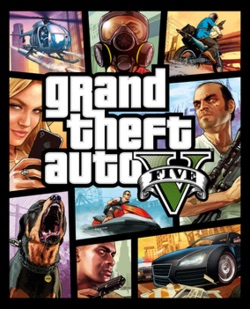
People have asked the same question about this series since 1997: how can a game about stealing cars be good for anyone? A book we love, You Are a Zookeeper, answers it about Grand Theft Auto Online: "The content is theft and murder; the experience is brotherhood." Grand Theft Auto V was a crew game wearing a crime costume.
GTA 6 has shrunk the crew to two. Look at what it measures. Not just cash and wanted stars, but how close Jason and Lucia are, how much they have saved for their kid, and how much harm you did along the way. The ending you get is built from those numbers. The content is still crime. What the game counts is whether you looked after someone.
That is an old pull. Michael Tomasello and colleagues argue humans evolved as foragers who depended on their partners, so we had a direct interest in our partners' well-being. A partner who is hurt or hungry is your problem too. The scene where Lucia gets Jason out of the hospital, and the weeks in the motel after it, run on that.
Richard Ryan, Scott Rigby and Andrew Przybylski found that games satisfy three needs, competence, autonomy and relatedness, and that this predicts how much people enjoy them and want to come back. An open world has always handed you the first two. You get good at driving and shooting, and you go where you like. This one is built around the third. Its biggest systems are about another person.
This is where it stops being only about a video game. In real life the things GTA 6 counts are hard to see. Nobody shows you a meter for how close you and your partner are. Savings feel abstract. The harm you do rarely comes back with your name on it. A game makes all three visible and gives them back to you as a score, and then it tells you, at the end, what they added up to. People do not find that a burden. They find it a relief.
As for the worry about violence, Johan Huizinga described play in 1938 as something set apart from ordinary life, inside what came to be called the magic circle. Players know where the edge of the circle is. The Zookeeper puts it more bluntly: "The player is not practising cruelty on anyone. The player is moving a number."
What is new is that this game hands you a number for cruelty and makes it cost you. The best ending is closed to the cruel. Nobody is forced to play it kindly. But for the first time in this series, playing it kindly is how you win.
Quick answers
When did GTA 6 come out? On 19 November 2026.
What is it on? PlayStation 5 and Xbox Series X/S. It is also playable on Xbox One through Xbox Cloud Gaming.
Is GTA 6 on PC? Not yet. No date has been announced. Industry sources reported in October 2026 that a PC version is expected in the first quarter of 2027.
Is it on PlayStation 4? No.
How much is it? US$79.99 for the standard edition. The Ultimate Edition costs more and adds extra clothing, vehicles, weapons, locations and missions.
Is there a disc? Not at launch. Boxed copies contain a download code.
Who are the main characters? Jason Duval, played by Dylan Rourke, and Lucia Caminos, played by Manni L. Perez. You play as both.
Where is it set? In Leonida, a fictional state based on Florida. Its biggest city is Vice City, based on Miami.
How big is the map? It is reported to be three times the size of the playable area in Red Dead Redemption 2.
Is it multiplayer? It launched as a single-player game.
What frame rate does it run at? 30 frames per second on both consoles.
Is there a first-person mode? Not at launch, apart from aiming certain weapons.
Are there microtransactions? Rockstar said there would be none in the game at launch.
How many endings are there? Several. They depend on your Criminal Profile, your Family Savings, how close Jason and Lucia are, and your choices. You can replay the finale to see others.
Can you replay missions? Only the finale.
Who did the music? The score is by Justice. The radio stations are hosted by artists including Lana Del Rey, Morgan Wallen, Bad Bunny and Robyn. There is also a 34-track album of original songs.
What did the critics give it? 99 out of 100 on Metacritic, level with The Legend of Zelda: Ocarina of Time as the highest score on the site.
How many copies has it sold? 32.5 million before release, according to Take-Two, and US$3.79 billion in its first 24 hours. Those figures are from the first few days and will be out of date quickly.
Should you play it?
If you have a PlayStation 5 or an Xbox Series X/S, the critics could hardly be clearer. If you play on PC, you wait, probably until early next year, and nobody has promised that. If 30 frames per second bothers you, it will bother you here. If you want to own a disc, there isn't one. And it is a game for adults, about adults doing terrible things. It is not for children.
If you do play, here is our advice, and it comes straight from how the endings work. Play it slowly. Listen to the people at the bus stop. Do things as a pair when you could do them alone. Put money in the Family Savings before you buy the car. Keep your profile clean when a job gets tense. You will see a better story, and we think you will have a better time.
Either way, take the idea home, because it is a good one. Pick your person. Start a Family Savings of your own, an actual number you both can see go up. Do the thing that brings you closer this week and notice that it did. Keep your profile clean. Leonida is a made-up state full of crooks, and that is still the best advice in it.
More on this: wanting is not liking, what games are really for, and our write-up of Grand Theft Auto V.
Sources
- Grand Theft Auto VI. Wikipedia, revision 1387328845 (23 November 2026). en.wikipedia.org
- Grand Theft Auto. Wikipedia, revision 1387169576 (22 November 2026). en.wikipedia.org
- Grand Theft Auto: Vice City. Wikipedia, revision 1386867085 (21 November 2026). en.wikipedia.org
- Rockstar Games. Wikipedia, revision 1387089387 (22 November 2026). en.wikipedia.org
- Lucia Caminos. Wikipedia, revision 1387305153 (23 November 2026). en.wikipedia.org
- Dylan Rourke. Wikipedia, revision 1387270357 (23 November 2026). en.wikipedia.org
- Grand Theft Auto VI: The Album. Wikipedia, revision 1387272582 (23 November 2026). en.wikipedia.org
- Grand Theft Auto VI: Original Score. Wikipedia, revision 1387192266 (22 November 2026). en.wikipedia.org
- Grand Theft Auto VI: An Extended Look. Wikipedia, revision 1387191340 (22 November 2026). en.wikipedia.org
- You Are a Zookeeper. IMXUS Books. imxus.com
- Berridge, K. C., & Robinson, T. E. (1998). What is the role of dopamine in reward: hedonic impact, reward learning, or incentive salience? Brain Research Reviews, 28(3), 309-369. doi:10.1016/S0165-0173(98)00019-8
- Schultz, W., Dayan, P., & Montague, P. R. (1997). A neural substrate of prediction and reward. Science, 275(5306), 1593-1599. doi:10.1126/science.275.5306.1593
- Tomasello, M., Melis, A. P., Tennie, C., Wyman, E., & Herrmann, E. (2012). Two key steps in the evolution of human cooperation: The interdependence hypothesis. Current Anthropology, 53(6), 673-692. doi:10.1086/668207
- Ryan, R. M., Rigby, C. S., & Przybylski, A. (2006). The motivational pull of video games: A self-determination theory approach. Motivation and Emotion, 30(4), 344-360. doi:10.1007/s11031-006-9051-8
- Durkheim, E. (1912). The Elementary Forms of Religious Life.
- Huizinga, J. (1938/1949). Homo Ludens: A Study of the Play-Element in Culture.