Why we play
Call of Duty: what games are really for
The biggest shooter series ever made is not called Call of Pleasure. It is called Call of Duty. That name is the whole answer.
Read the box
Why are video games fun? Everyone has a theory. The lights, the noise, the dopamine, the escape. Skip the theories and read the box. Call of Duty has sold more than 500 million copies, among the best-selling game series of all time. And its name is a word your grandparents used about war, work and family. Duty.
A book we love, You Are a Zookeeper, puts it plainly: "Not Call of Pleasure, not Call of Profit – Call of Duty. The name is not accidental." It speaks to the drive "to protect, to serve a unit, to be needed by something larger than oneself."
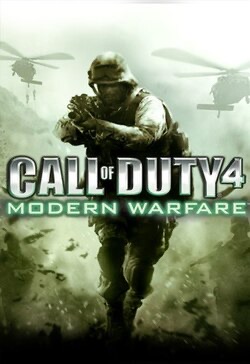
Watch what a Call of Duty player does all night. Covers a mate. Calls in a spy plane so the whole team sees the enemy on radar. Holds a flag so the squad can push. In Call of Duty 4, you earn rank for capturing points and calling in support, not just for kills. The game pays you for being useful.
Ask the players
If shooters were about shooting, people would play them alone. They don't. When Jeroen Jansz and Martin Tanis surveyed 751 online shooter players, more than eight in ten belonged to a clan, and the social reason was the strongest predictor of how long they played. Marie Frostling-Henningsson spent months in two Stockholm gaming centres watching and interviewing Counter-Strike players, and found they played foremost to cooperate and talk. She called her paper "Brothers in Blood".
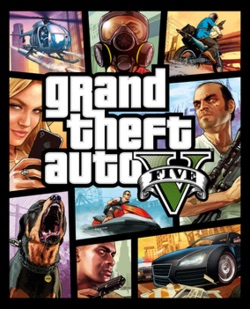
Grand Theft Auto V is the hardest test. You steal cars. You rob banks. And it is the second-best-selling game ever made. The Zookeeper again: "The content is theft and murder; the experience is brotherhood." Grand Theft Auto Online runs on crews: you plan the heist together, you cover each other, you split the take. The robbery is the setting. The crew is why you log in.
The story is always service
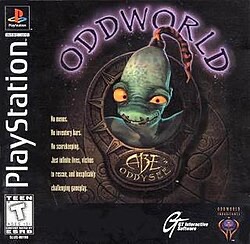
Look under any great game and you find the same plot. Mario crosses eight worlds for someone else. Link saves a kingdom. In Oddworld: Abe's Oddysee you are a meat-factory worker who finds out the factory plans to turn you and your workmates into a snack. You could just run. The game counts how many of the other 99 you lead out, and you only get the good ending if you save at least 50 of them.
Every guy we know wants to be a hero. So does everyone else. When Lindsey Rankin and Alice Eagly asked people to name heroes they personally knew, women and men came up equally. Ask people what heroes are for, and Elaine Kinsella's team found three answers: they make other lives better, they show what's right, and they protect. A game is the one place you can do all three before dinner.
Millions of years of practice
None of this is new. Play runs right through the mammal family tree, and Marek Špinka and colleagues argue it trains bodies and nerves for the moment things go wrong. Helping is that old too. Felix Warneken and Michael Tomasello found babies of 18 months will help a stranger reach a goal, unasked and unrewarded.
Here is the bit current wisdom forgets. Our ancestors hunted together and depended on their partners, so looking after your partner was looking after yourself. Brian Hare calls it survival of the friendliest: selection favoured friendliness inside the group over aggression. Richard Wrangham argues groups put down their most violent members, which bred hot-headed aggression out of us. The people who fought their own tribe left fewer children. The people who helped got status: in Hardy and Van Vugt's experiments, the most generous member of a group rose to the top. Among the Meriam of the Torres Strait, turtle hunters who share the catch at the feast win standing for it.
So when you feel that pull at 2am, headset on, refusing to leave your squad one man down, that is not a glitch. That is the oldest thing in you, working exactly as built.
Why the game wins
Real life asks for the same service. It just hides the rules. Nobody tells you the next step. Nobody shows your progress. Nobody says thanks.
A game does all three. It hands you goals in order, each a little harder, which is exactly what 35 years of goal-setting research by Edwin Locke and Gary Latham says makes people try harder. It gives you credit the second you earn it: rank, a medal, a teammate yelling your name. Adam Grant and Francesca Gino found a simple thank-you makes helpers help again, because it makes them feel valued. And it lets you help by choice. Netta Weinstein and Richard Ryan showed helping you chose lifts your well-being; helping under pressure does far less.
The game didn't invent the drive. It just built a better outlet for it than most jobs, towns and families manage.
Make your life the game
If you love games, why shouldn't your whole life be one? It would be more fun. Steal the four things that make them work.
Levels. Break anything big into steps, easiest first, each a bit harder than the last. Learning a trade, getting fit, fixing a house. If you're bored, skip a level. If you're drowning, drop back one.
Credit. Celebrate every level you clear. A tally on the fridge, a text to a mate, a beer at the end. Give it to other people too: a thank-you is the cheapest power-up there is.
A squad. Make it for someone. People who spend on others are happier than people who spend on themselves, in Elizabeth Dunn's experiment and across 136 countries in Lara Aknin's. Find your crew: your street, your team, your family.
A hero moment. Somewhere near you is someone who needs exactly what you can do. Turn up. That's the real call, and it pays better than any killstreak.
Want the how-to in detail? Read why games are fun: it is the order, then see which skills you've been levelling up all along.
Sources
- You Are a Zookeeper. IMXUS Books. imxus.com
- Jansz, J., & Tanis, M. (2007). Appeal of playing online first person shooter games. CyberPsychology & Behavior, 10(1), 133-136. doi:10.1089/cpb.2006.9981
- Frostling-Henningsson, M. (2009). First-person shooter games as a way of connecting to people: "Brothers in blood". CyberPsychology & Behavior, 12(5), 557-562. doi:10.1089/cpb.2008.0345
- Kinsella, E. L., Ritchie, T. D., & Igou, E. R. (2015). Lay perspectives on the social and psychological functions of heroes. Frontiers in Psychology, 6, 130. doi:10.3389/fpsyg.2015.00130
- Rankin, L. E., & Eagly, A. H. (2008). Is his heroism hailed and hers hidden? Women, men, and the social construction of heroism. Psychology of Women Quarterly, 32(4), 414-422. doi:10.1111/j.1471-6402.2008.00455.x
- Špinka, M., Newberry, R. C., & Bekoff, M. (2001). Mammalian play: Training for the unexpected. The Quarterly Review of Biology, 76(2), 141-168. doi:10.1086/393866
- Warneken, F., & Tomasello, M. (2006). Altruistic helping in human infants and young chimpanzees. Science, 311(5765), 1301-1303. doi:10.1126/science.1121448
- Tomasello, M., Melis, A. P., Tennie, C., Wyman, E., & Herrmann, E. (2012). Two key steps in the evolution of human cooperation: The interdependence hypothesis. Current Anthropology, 53(6), 673-692. doi:10.1086/668207
- Hare, B. (2017). Survival of the friendliest: Homo sapiens evolved via selection for prosociality. Annual Review of Psychology, 68, 155-186. doi:10.1146/annurev-psych-010416-044201
- Wrangham, R. W. (2018). Two types of aggression in human evolution. Proceedings of the National Academy of Sciences, 115(2), 245-253. doi:10.1073/pnas.1713611115
- Hardy, C. L., & Van Vugt, M. (2006). Nice guys finish first: The competitive altruism hypothesis. Personality and Social Psychology Bulletin, 32(10), 1402-1413. doi:10.1177/0146167206291006
- Smith, E. A., & Bliege Bird, R. L. (2000). Turtle hunting and tombstone opening: Public generosity as costly signaling. Evolution and Human Behavior, 21(4), 245-261. doi:10.1016/S1090-5138(00)00031-3
- Locke, E. A., & Latham, G. P. (2002). Building a practically useful theory of goal setting and task motivation: A 35-year odyssey. American Psychologist, 57(9), 705-717. doi:10.1037/0003-066X.57.9.705
- Grant, A. M., & Gino, F. (2010). A little thanks goes a long way: Explaining why gratitude expressions motivate prosocial behavior. Journal of Personality and Social Psychology, 98(6), 946-955. doi:10.1037/a0017935
- Weinstein, N., & Ryan, R. M. (2010). When helping helps: Autonomous motivation for prosocial behavior and its influence on well-being for the helper and recipient. Journal of Personality and Social Psychology, 98(2), 222-244. doi:10.1037/a0016984
- Dunn, E. W., Aknin, L. B., & Norton, M. I. (2008). Spending money on others promotes happiness. Science, 319(5870), 1687-1688. doi:10.1126/science.1150952
- Aknin, L. B., Barrington-Leigh, C. P., Dunn, E. W., et al. (2013). Prosocial spending and well-being: Cross-cultural evidence for a psychological universal. Journal of Personality and Social Psychology, 104(4), 635-652. doi:10.1037/a0031578